Custom and pre-engineered Robotic Welding Solutions for Manufacturers
Engineer a Custom Robotic Welding System Built To Suit Your Needs
BP Automation designs and manufactures custom robotic welding machines and automated welding systems that increase throughput, deliver consistent weld quality, reduce rework, and lower your dependency on manual weld labor—backed by experienced industrial automation engineers. We also supply robotic welding cells which are a pre-engineered automation solution that delivers consistent weld quality while improving production efficiency
- Turnkey robotic welding cells engineered for your parts and cycle times
- MIG & TIG robotic welding integration, multi-axis automation, and custom fixtures
- Designed for 24/7 industrial environments with full support from concept to commissioning
Trusted by industrial manufacturers across heavy equipment, structural steel, oil & gas components, and precision fabrication.
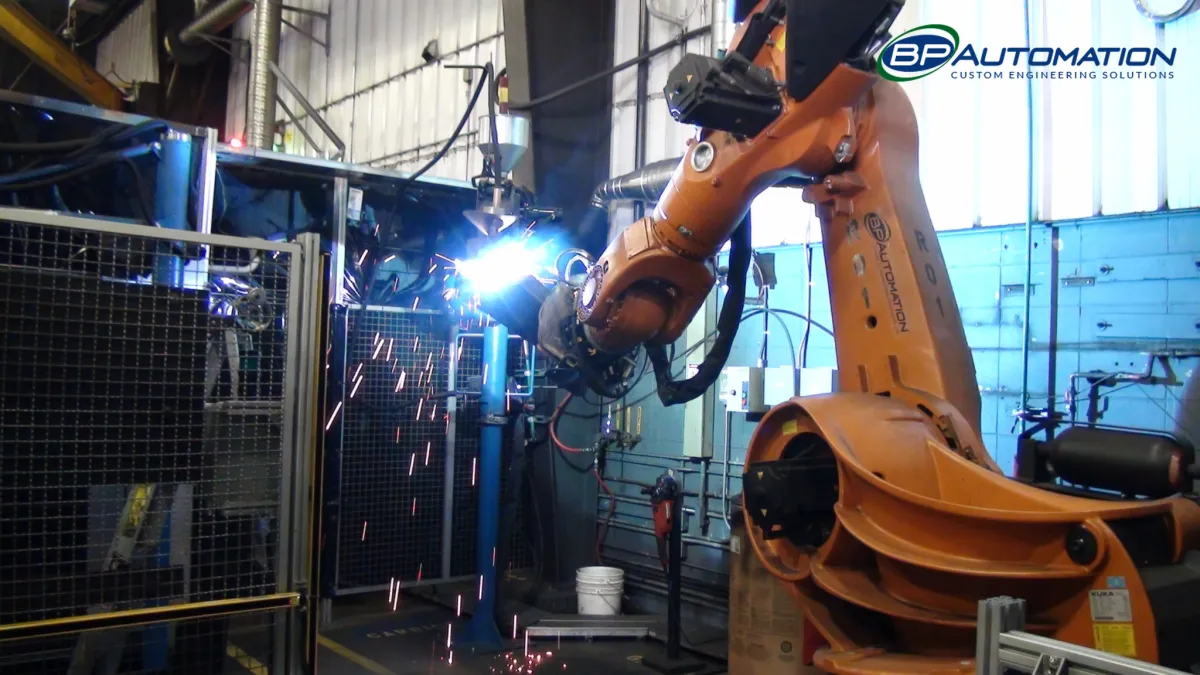
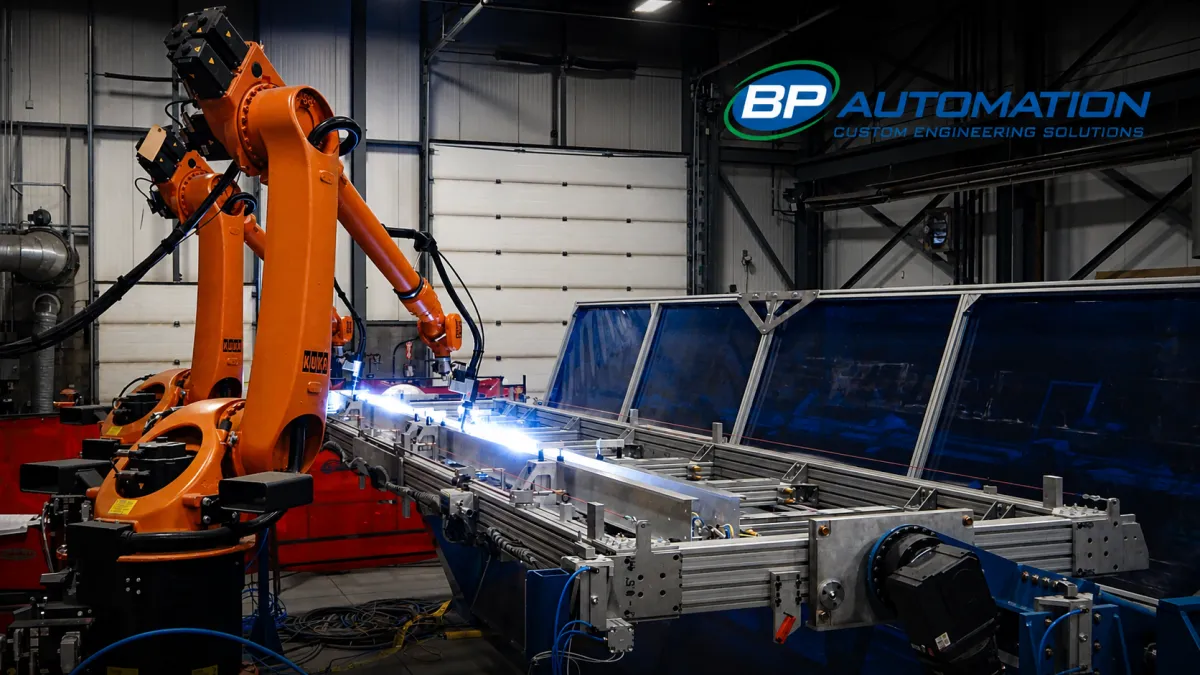
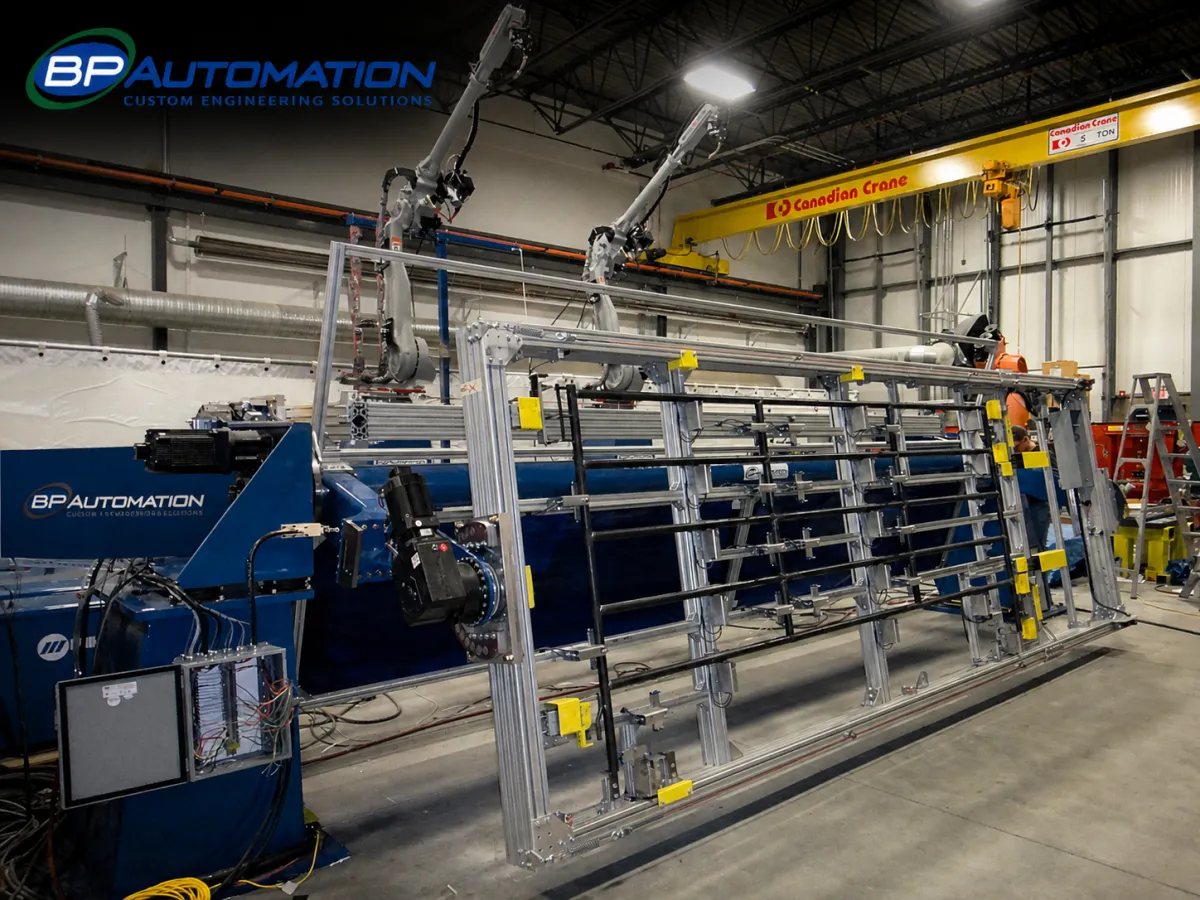
Example robotic welding system with custom fixtures and guarding. BP Automation engineers each cell around your parts, process, and safety standards.
Industrial automation expertise · Robotic system design · On-site commissioning
Trusted partners





Why Manufacturers Choose Robotic Welding
Robotic welding systems allow manufacturers to stabilize production, address skilled welder shortages, and improve weld quality across every shift. BP Automation engineers automated welding systems that are optimized for uptime, accessibility, and repeatable performance. On average the robot pays for itself in 2-3 years and has a welding lifespan for 20+ years.
Consistent Weld Quality
Robotic welding machines apply the same parameters, path, and technique on every part. This reduces variation, porosity, and distortion—improving first-pass yield and greatly reducing rework and scrap.
Higher Throughput & Uptime
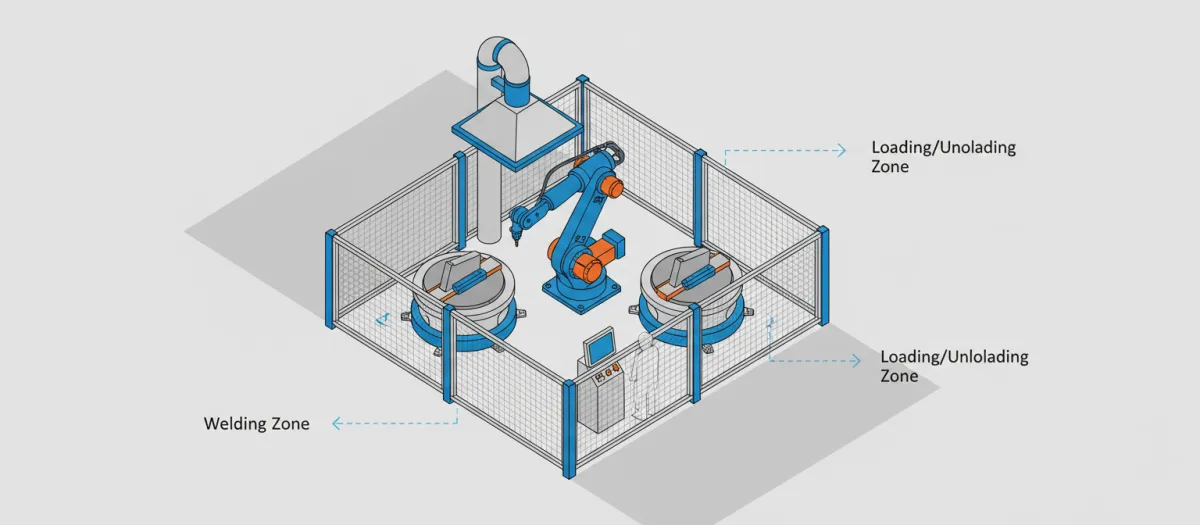
Automated welding systems maintain consistent cycle times and can run extended shifts with minimal supervision. Multi-station robotic welding cells can load one side while welding on the other to maximize arc-on time.
Improved Safety & Less Labor Dependency
Robotic welding removes operators from heat, fumes, and repetitive motion while allowing you to redeploy skilled welders to higher-value work. Guarding and safety systems are engineered to meet industrial standards.
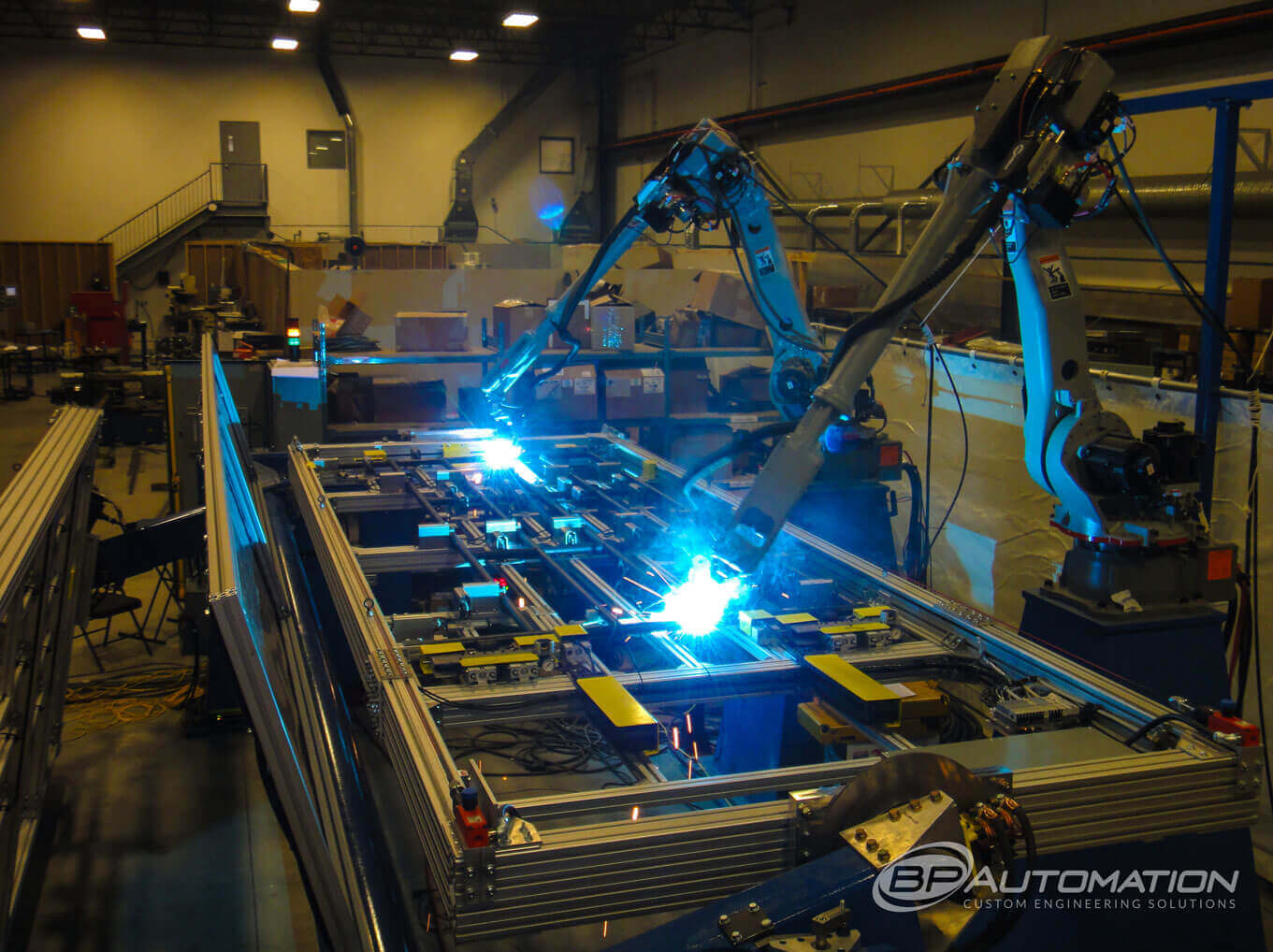
Robotic Welding Cells
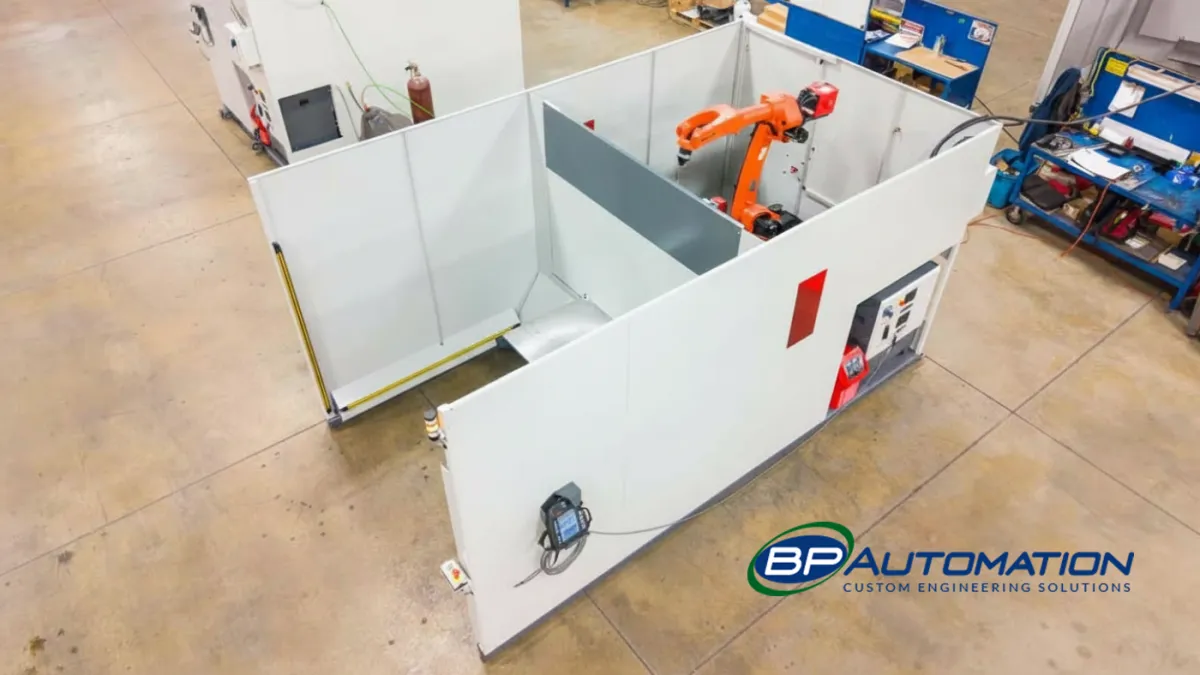
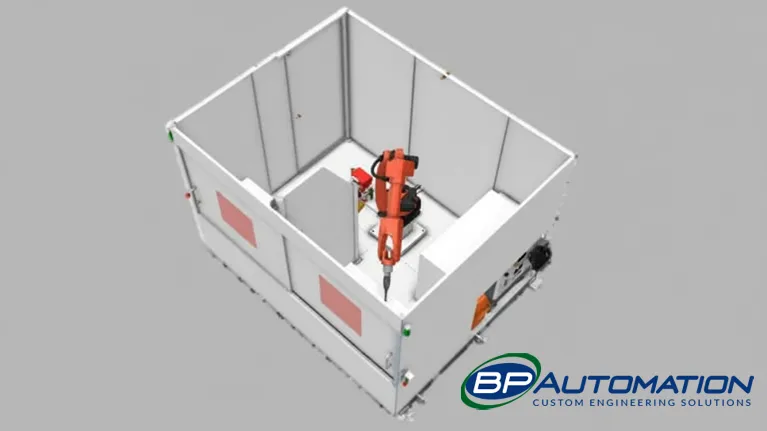
Our robotic welding cells are a pre-engineered automation solution that delivers consistent weld quality while improving production efficiency. It integrates industrial robotics, welding technology, and intelligent control systems within a compact production cell, enabling manufacturers to automate welding with precision, repeatability, and reliable performance.
Designed for modern manufacturing, BP Automations welding cells simplifies automation by combining robotic welding technology, integrated welding equipment, and intuitive controls in a single system. Its compact, modular design fits easily into production environments while delivering high-quality welding results.
Key Features
Integrated Robotic Welding System
The automation cell combines robotics, welding equipment, and system controls into a complete welding solution.Consistent Weld Quality
Automated welding ensures precise and repeatable welds across production cycles.Compact Automation Cell
Optimized layout reduces floor space requirements while maintaining full functionality.Efficient Production Automation
Robotic welding increases productivity and supports continuous operation.
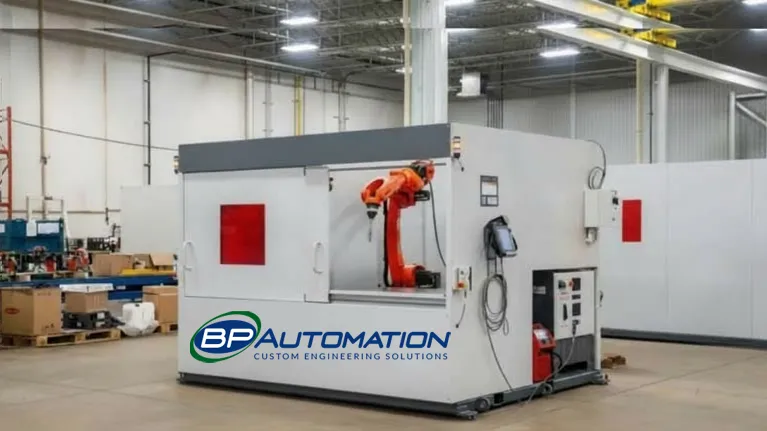
Custom Robotic Welding Systems Built for Your Parts and Volumes
BP Automation designs and manufactures custom robotic welding automation tailored to your plant layout, part mix, takt times, and quality requirements. From standalone robotic welding machines to fully integrated robotic welding cells, our team delivers turnkey systems ready for production.
- Robotic welding cell design and simulation for optimal reach, access, and cycle time
- Robotic integration with MIG, pulsed MIG, and TIG power sources from major welding brands
- Single- and multi-axis positioners for rotating, tilting, or indexing large and complex weldments
- Custom fixtures and tooling engineered for repeatable part location and fast changeover
- Automated loading/unloading, sensors, and part verification to protect quality and equipment
- PLC, HMI, and safety system integration for a complete automated welding system
Typical Robotic Welding Machine Configuration
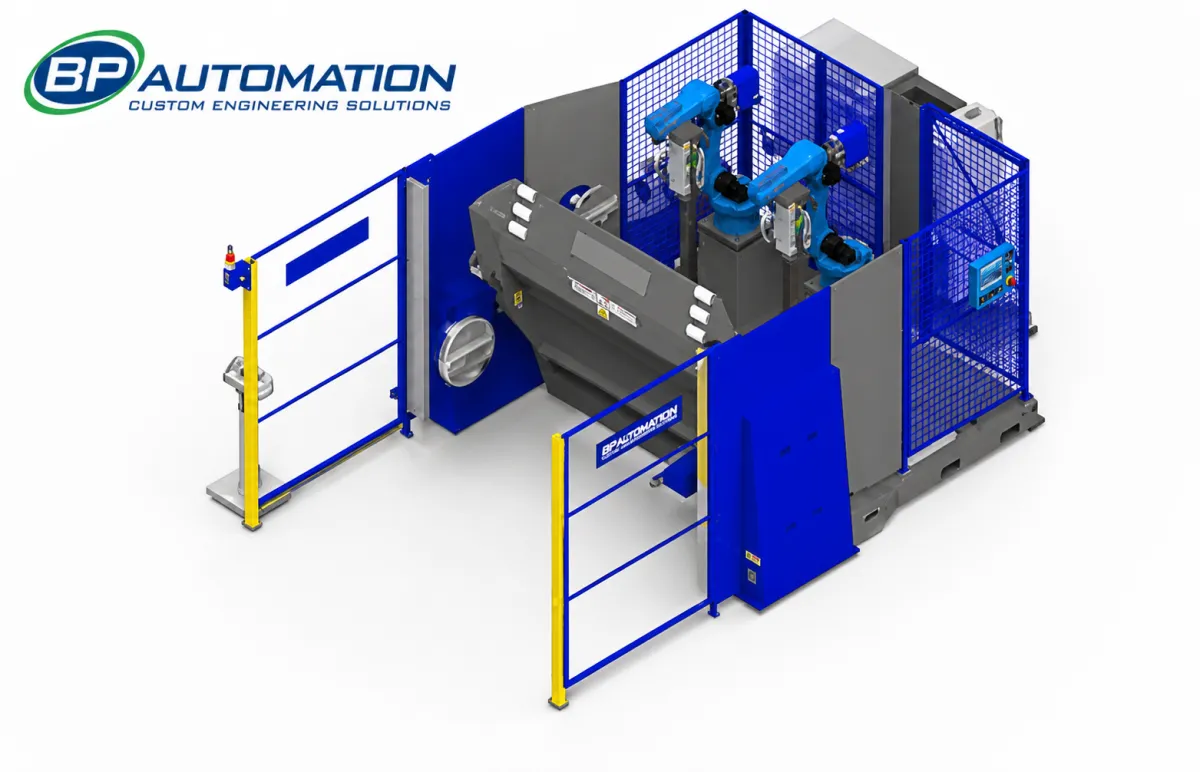
Every robotic welding solution is engineered for a specific application. A typical BP Automation robotic welding system can include:
- 6-axis industrial welding robot with wire feeder and torch
- Servo-driven positioner or headstock/ tailstock for multi-axis part manipulation
- Custom welding fixtures and clamps for repeatable part location
- Perimeter guarding, interlocked doors, and light curtains
- Fume extraction integration and cable management
- Operator HMI with stored weld programs and error diagnostics
Robotic Welding Solutions for Manufacturers Across Key Industries
BP Automation provides custom robotic welding automation for manufacturers that need reliable, high-duty-cycle production. Typical applications include:
Heavy Equipment Manufacturing
Frames, booms, buckets, chassis, and structural weldments requiring high deposition rates and consistent penetration.
Structural Steel & Industrial Fabrication
Beams, columns, frames, skids, racks, and custom fabrications that benefit from repeatable automated welding systems.
Oil & Gas and Automotive Components
Pressure-retaining components, pipe spools, brackets, frames, and sub-assemblies where repeatability and documentation matter.
Why BP Automation for Robotic Welding Automation
BP Automation specializes in custom automation engineering, robotic system design, and manufacturing automation solutions for industrial plants. We combine mechanical design, controls, and welding process knowledge to deliver robotic welding systems that perform in real production environments.
- Concept development, simulation, and feasibility for robotic welding automation
- Mechanical design of robotic welding cells, tooling, and positioners
- Controls engineering, PLC programming, HMI, and robot programming
- Manufacturing, assembly, FAT, and on-site installation
- Operator training, documentation, and ongoing service support
From First Conversation to Production-Ready Cell
Our team works with your engineers, weld supervisors, and operations leaders to define requirements and deliver a robotic welding system that meets them.
- Application review and ROI discussion
- Concept layouts and cycle time estimates
- Detailed design and approvals
- Build, test, and factory acceptance
- Installation, commissioning, and handover
Request a Robotic Welding Quote
Share your parts, volumes, and welding requirements and an automation engineer from BP Automation will review your application and recommend a robotic welding system approach.
Typical next steps: 20–30 minute call, preliminary concept and budgetary pricing, then detailed proposal for your robotic welding machine or cell.
- Custom robotic welding automation engineered for your plant
- Support from concept through installation and commissioning
- Designed for industrial environments and production reliability
Request a Robotic Welding Consultation
Tell us about your project and a BP Automation engineer will follow up within one business day.
Your Automation Snapshot
| Year | Current Labor Cost | Future Labor Cost | Annual Savings | Cumulative Savings |
|---|
Robotic Welding Automation FAQs
Answers to common questions from manufacturers evaluating robotic welding systems and custom robotic welding automation.
How much does a robotic welding system cost?
Cost depends on robot size, number of axes, fixtures, part complexity, safety devices, and integration requirements. Simple single-station robotic welding machines can start in the low six-figure range, while multi-station, multi-axis automated welding systems can be higher. BP Automation typically begins with a consultation to understand your parts, annual volume, and quality targets, then provides a budgetary range followed by a detailed quotation.
Can BP Automation build custom robotic welding machines?
Yes. BP Automation focuses on custom robotic welding automation. We design and manufacture purpose-built robotic welding cells, positioners, fixtures, and tooling to match your specific parts and production flow. This includes integrating robots, welding power sources, safety systems, and controls into a turnkey robotic welding system.
What welding processes can be automated?
Common robotic welding processes include GMAW/MIG, pulsed MIG, FCAW, and GTAW/TIG. Depending on your material, thickness, and joint design, we can recommend the right welding process and power source to integrate into your robotic welding cell. We also evaluate if pre-heating, seam tracking, or weaving are required to achieve consistent weld quality.
How long does implementation typically take?
Lead time varies with project scope and component availability, but a typical custom robotic welding system may require several months from purchase order to production-ready installation. This includes design, manufacturing, programming, testing, and on-site commissioning. We will outline an estimated schedule as part of your proposal so you can plan production and changeover.
What information do you need to quote a robotic welding solution?
Helpful information includes part drawings or 3D models, weld symbols, target cycle time, annual volume, material grades and thicknesses, existing welding procedures, and any plant layout constraints. Our team will guide you through the data needed to engineer the right robotic welding automation for your application.
What is ROI?
ROI (Return on Investment) is a measure that compares the expected financial benefit or savings from a robotic welding system to its total cost, typically expressed as a percentage. BP Automation can help estimate your project’s payback period and long-term savings by analyzing your parts, volumes, labor, and throughput requirements for a robotic welding solution.
Ready to Automate Your Welding Process?
Talk with BP Automation about a robotic welding machine or robotic welding system tailored to your manufacturing operation. Our team will help you evaluate ROI, scope, and implementation for a custom robotic welding solution.
BP Automation provides custom robotic welding solutions for manufacturers who need reliable, repeatable weld quality and higher throughput from automated welding systems.